Chinese hot pot style
Light Hot Pot
Qing Tang Huo Guo
Clear, gentle broths for fresh vegetables, tofu, mushrooms, seafood, and thin meats.
Broth style: Clear broth, mushroom broth, chicken broth, or seafood broth
Best for
Families
Best for
First hot pot night
Best for
Kids or mild palates
Best for
Seafood and vegetables
Overview
What makes Light Hot Pot work
Hot pot is flexible, but each broth style has a different job. This page gives the flavor logic before a full recipe is added.
Light hot pot is the easiest entry point for many American home cooks because the broth is not trying to carry all the flavor by itself. The pot stays clean and gentle, while each person builds stronger flavor with dipping sauce.
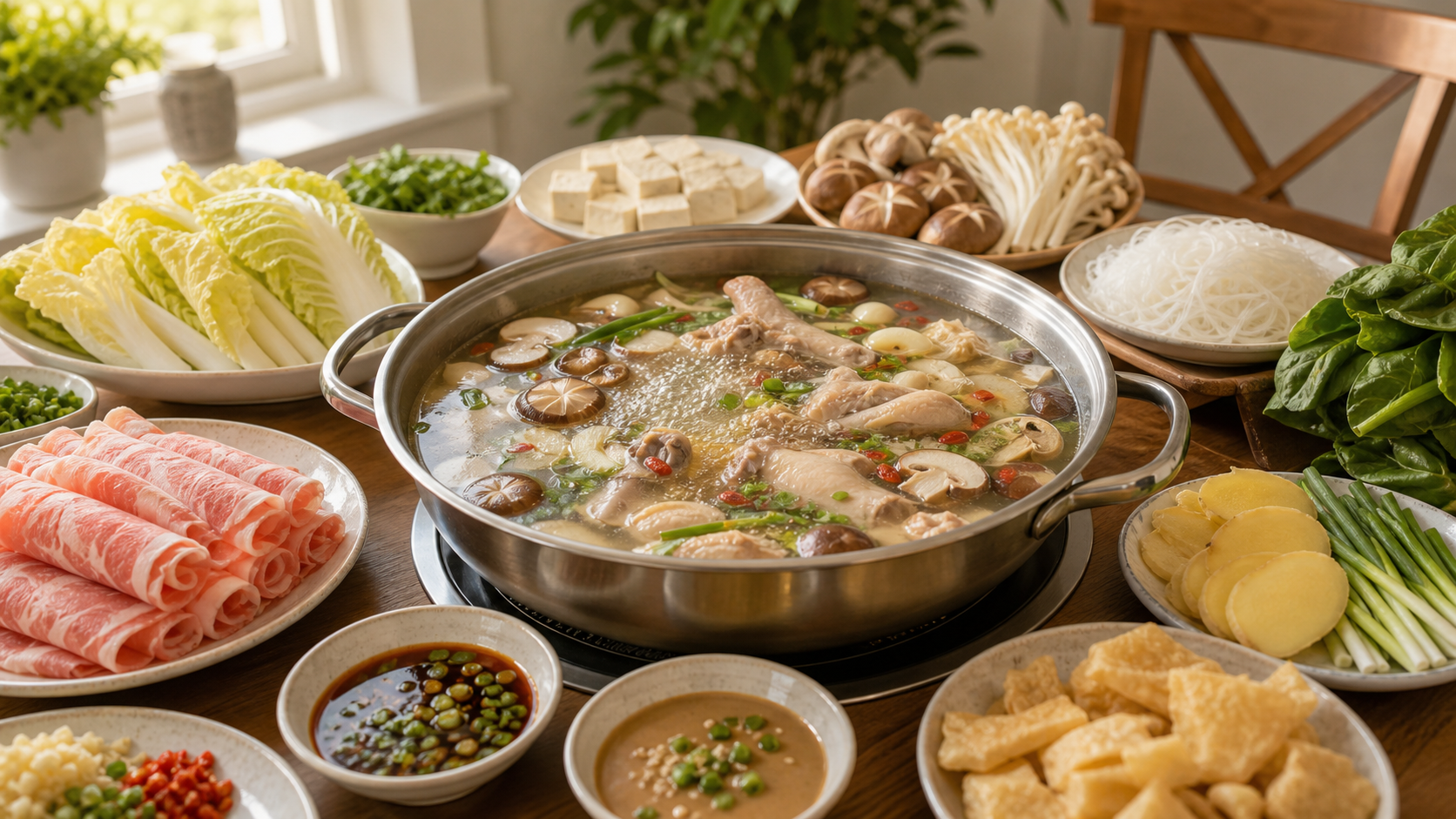
This style is common across many Chinese home tables: a simple broth, plenty of leafy greens, tofu, mushrooms, fish balls, thin-sliced meat, and a sauce bowl that can be as mild or bold as the eater wants.
The goal is balance. If spicy hot pot is about drama, light hot pot is about freshness, comfort, and letting good ingredients taste like themselves.
Broth recipe
Ginger-Scallion Mushroom Broth
A practical home-kitchen starting point for this hot pot style.
Broth ingredients
- 8 cups low-sodium chicken stock, mushroom stock, or water
- 6 slices ginger
- 4 scallions, cut into long pieces
- 8 dried shiitake mushrooms or 12 oz fresh mixed mushrooms
- 1 small piece kombu or 1 tsp mushroom seasoning, optional
- 1 tsp salt, plus more only after simmering
- 1 tbsp Shaoxing wine or dry sherry, optional
How to start the pot
- 1Add stock, ginger, scallions, and mushrooms to the hot pot and bring to a gentle simmer.
- 2Simmer for 15 to 20 minutes so the broth tastes aromatic before the meal starts.
- 3Taste before adding more salt. The broth will become saltier as ingredients and sauces enter the pot.
- 4Keep the heat at a steady simmer and add leafy greens in smaller rounds so the pot stays hot.
Shopping list
What to buy for this hot pot
Start with the broth, then add enough proteins, vegetables, noodles, and sauce items for the table.
Broth and aromatics
- Low-sodium stock
- Ginger
- Scallions
- Dried or fresh mushrooms
- Optional kombu
Main ingredients
- Napa cabbage
- Bok choy or spinach
- Tofu or tofu puffs
- Glass noodles
- Thin-sliced beef or pork
- Shrimp or fish balls
Sauce station
- Sesame paste
- Soy sauce
- Black vinegar
- Garlic
- Cilantro
- Scallions
- Optional chili oil
Ingredients
Ingredient logic
- Chicken stock, mushroom stock, seafood stock, or water enriched with ginger and scallions
- Napa cabbage, bok choy, spinach, chrysanthemum greens, or other leafy vegetables
- Tofu, tofu puffs, mushrooms, glass noodles, fish balls, shrimp, and thin-sliced beef or pork
- Dipping sauce ingredients such as sesame paste, soy sauce, scallions, cilantro, garlic, and chili oil on the side
Flavor profile
How it should taste
Broth base
Start with a low-sodium stock or a simple ginger-scallion broth. The broth should taste savory but not salty before ingredients go in.
Sesame dipping sauce
Sesame paste, soy sauce, a little vinegar, garlic, scallions, and warm water make a reliable sauce for mild hot pot.
Fresh aromatics
Ginger and scallions are more important than a complicated seasoning packet for this style.
Dipping sauces
- Sesame paste, soy sauce, black vinegar, scallion, cilantro, and garlic
- Soy sauce, sesame oil, garlic, and chili oil for people who want more punch
- Light ponzu-style soy and vinegar sauce for seafood-heavy pots
Tools
- A portable induction burner or electric hot pot
- A wide pot with enough room for vegetables and sliced meats
- Small strainers or hot pot ladles for retrieving delicate ingredients
- Individual sauce bowls and long chopsticks
Common mistakes
- Making the broth too salty before simmering ingredients.
- Overcrowding the pot with greens so the broth cools down too much.
- Skipping the dipping sauce, which is where much of the flavor is built.
- Cooking thin meat slices too long; they usually need only a quick swish.